Monday, October 10, 2016

The Great Circle of Life and All That Jazz


So on this blog there are likely a whole library’s worth of hyena post archives, and rightfully so given the masthead of this entity, however with much less frequency do we discuss all of the events and states circling around this species that contextualize their existence.  Often times this conglomeration of events and states is culturally and romantically referred to as the circle of life.  In reality, it is less of a circle and more of the contemporary model of the atom with several orbiting electron shells influencing the nucleus where biotic interactions play themselves out.  The influences of these electron shells might include, but are not limited to: the movement of tectonic plates, lunar tidal forcing, the hydrologic cycle, long-term climatic trends, random destructive events like volcanic eruptions or tsunamis, and anthropogenic impacts.  To keep things simple, let’s acknowledge the existence of these electron shells but consider only biotic nucleus of interactions that our hyenas encounter on an annual basis. 

Mufasa teaches Simba the meaning of the Great Circle of Life.

Prey
Although hyenas are often given a bad rap as the bully scavengers of the African savannah, in the Mara [Overused Statistic Warning!], hyenas hunt up to 90% of their own food due to the abundance of prey species.  Hyenas are also incredibly versatile predators.  They have been known to hassle hippos and baby elephants when in large numbers, hunt every species of ungulate that inhabits the Mara when the opportunity arises, and Fisi RAs have even seen them eating termites and harassing turtles.  It is even more impressive if you consider that each of these species has different adaptations to thwart predators and in spite of these hyenas can still successfully hunt them.  Hippos and elephants have great bulk and stamina, wildebeest and zebra use numbers and coat patterns for predator swamping, topi stand on termite mounds to spot predators, impala and Thomson’s gazelle rely on speed and agility, and turtles utilize their hard shells for protection.

Baby Thomson's gazelles make for superb fun-sized hyena snacks.
Competitors
Moving on, hyenas do not only need to catch the prey they desire but also compete with other predators in the Mara ecosystem.  Lions (ambush pack hunters), leopards (solitary ambush predator), cheetahs (speed specialist), and African wild dogs (pack hunting endurance specialists) may have different modes for catching prey but their niches still overlap to a degree.  By hunting in groups, using great endurance, and bone-crushing jaws, the generalist hyena can persist in this matrix of apex predators.

A male lion kills an adult wildebeest after a sunset crossing of the Mara river. 
Scavengers
Once hyenas have successfully killed their prey animal of choice, they must defend it against scavengers looking to stake their claim on the carcass.  Lions are a perennial threat to hyena kills.  It requires four adult hyenas to fend off one lioness and seven adult hyenas to defend against one male lion, so unless there are a large number of hyenas on a carcass it is very easy for lions to bully hyenas off a kill.  While these animals cannot steal an entire carcass from a clan of hyenas, jackals, marabou storks, vultures, and mongoose will attempt to steal scraps if hyenas aren’t actively defending their kill.  Over time, this can sometimes significantly diminish the caloric value of the carcass.  When considering hyenas’ scavenging abilities, the aforementioned bone-crushing jaws certainly aid in giving these animals access to bone marrow – a resource that not too many other carnivores can readily access.

It's a good thing detritivores are always hard at work cleaning up dead things when scavengers remain uninterested, otherwise this bloated hippo carcass would be floating around for a while. 
Detritivores
Although hyenas are capable of consuming 20% of their body weight in a single sitting, decay still becomes an issue even after considering competitors and scavengers.  It is certainly a good thing that microbes break down dead plant and animal matter, but this also means that after a certain amount of time carcasses will no longer possess a dietary value to hyenas.  It certainly plays a role in how often hyenas hunt, how quickly they consume meat, how much they can eat, and which parts of the animal they eat.


This is one of the many beautiful flowers that grows in Maasai Mara, making it a great neighborhood to raise hyena cubs.

Plants
Numerous grass species dominate the Mara in places and their height can have a significant impact on visibility.  This impacts hyenas in more ways than one.  Obviously, it is a great boon to hunting as ungulates have a much harder time spotting potential predators.  However, tall grass can also obscure hyena kills from scavengers and dens from threats to their cubs.  Meanwhile, shade-providing shrubs and trees can create microclimates up to 30oF cooler than the surrounding environs.  This provides a nice, cool place to sack out in the middle of the day.


Thursday, October 6, 2016

Three "Tails" of Life and Death

Three "Tails" of Life and Death

It’s a hard-knock life out here on the plains of the Maasai Mara. If you don't believe me, just take it from our hyena friends.

Photo credit to Erin Person. With two broken legs, Komo has learned to walk on her front legs only!
(Want to learn more about this incredible lady? Read more!)
Hyenas aren’t the only ones struggling for existence on the savanna. With hyenas, lions, crocodiles, and a multitude of other predators, life is precarious for the many herbivores that call the Maasai Mara home.

Herbivores and predators alike abound on these plains and -- especially after the recent wildebeest migration -- the savanna is littered with carcasses. However, it is quite a rarity to see a hunt in action. The other night, while out searching for hyenas, Robyn, Mike and I unexpectedly stumbled onto this rarity.


A young male lion finishes off his prey.
We stumbled onto a young male lion perched upon a wildebeest, fresh after the take-down. We watched in awe as the male lion glared at us, his kill still clutched in his jaws, his chin dripping with fresh blood.

Photo credit to Mike Kowalski. This lion's chin is soaked with wildebeest blood.
We were in our smallest vehicle, parked only 25 meters away, and had rolled down our windows to get a better look. To make things more interesting, a piece of bait (used in cognition trials for hyenas) seems to be lost in the car, so the horrendous stench (or, if you’re a lion or hyena, the enticing aroma) of rotting meat was wafting out of the open windows. We left the car running in case we needed to make a speedy getaway!

It was amazing to see a lion so soon after the thrill of the hunt. As we watched, however, we realized that the hunt wasn’t over just yet…

THIS VIDEO CONTAINS SOME ADULT LANGUAGE.


 Lions are ambush hunters, only capable of short, but explosive, sprints. Once they capture their prey, they suffocate it. This lion held his weight over his prey, squeezing the wildebeest’s throat inside of his powerful jaws, his large canines drawing blood. The wildebeest’s sides heaved as he struggled for breath. What was most striking to me was how calm and patient the lion was as he waited for the wildebeest to take its last labored breaths.

Soon after the hunt was truly finished, the male was joined by a flirty female, who he greeted and invited to share his kill with him.

Two lions greet over a freshly felled wildebeest carcass that will
continue to provide energy and nutrients to life around it.
______________________________________________________________

Although often thought of as scavengers, hyenas are actually quite impressive hunters. Although they are not above scavenging (no different than lions), hyenas in the Mara hunt up to 95% of their own food! However, they are very different than lions in their hunting strategy. Spotted hyenas, like canines, have very large hearts, affording them impressive endurance. Rather than ambushing their prey, they run it to exhaustion; one hyena chased its prey for a record-setting 24 kilometers (almost 15 miles)! However, not every hunt is so difficult, especially not during baby season in the springtime.

Lance, a high-ranking female hyena, seized opportunity when a tiny baby topi stumbled awkwardly into the world. When we arrived on the scene, she was just beginning to devour a tiny topi calf. Although this young hyena's jaws have not yet reached adult strength, she still easily cracked through the bones and quickly gulped down half of the carcass.

Lance eagerly wolfs down her hard-earned breakfast.
Meanwhile, the mother watched helplessly from the horizon before moving on.

The now calfless topi looks back one last time from the horizon.
After devouring half of the carcass, Lance picked up her delicious breakfast and headed to the West. We followed her for what seemed like forever, wondering what she was up to. After scaring away many zebra and topi and maneuvering around some threatening buffalo, she finally arrived at her destination: a den.

Lance picks up her kill and steadily makes her away across the savannah to the den to meet her clan-mates.
She occasionally pauses to adjust her grip on the carcass.
Lance's fellow hyenas were very excited to see her, greeting her with bristled tails and loud squitters. This resulted in a great deal of excitement and, of course, aggression. Despite their efforts to convince her, Lance would only allow cub O'Malley to share her earnings.

While fending off her adult clan-mates, Lance allows young female cub O'Malley to share in feeding
on the baby topi. O'Malley excitedly races about, crawls on the ground, and squitters.
The excitement continued to escalate, and the hyenas began to chase, snap at, and bite one another. Despite Lance's attempts to keep the kill from the other hyenas, her persistent clan-mates eventually got their share.

Jolly Roger (O'Malley's mom) manages to sneak off with the baby topi when Lance isn't looking.
Just when she thinks she's gotten away with it, here comes Recluse!
Click on the video to see a game of topi tug-of-war!
______________________________________________________________

We had our last glimpse into the awesome and brutal world of predator-prey interactions while driving through Happy Zebra Territory one rainy evening. The roads and tracks were too muddy for us to drive on, and we had just given up hope for seeing any hyenas that night. We were on our way back to camp when our luck changed: Chakram, a young male, darted across the road in front of us.

We quickly saw what Chakram was up to. Out of excitement, his tail shot up into the air, splaying out the long black hairs like a paintbrush. He slowed down, lowered his head, and slowly advanced toward the target of his excitement: a large zebra.

A zebra looks over its shoulder as it runs from Chakram.
The chase was on. Chakram cautiously ran after the zebra, who startled, turned tail, and ran. As the zebra ran, it stole glances over its shoulder at Chakram, who was gaining on it.

Then the zebra surprised us by stopping and turning to face Chakram. Chakram ceased to advance and instead retreated momentarily to assess the situation. The zebra took this chance to make a break for it. 

The zebra darts across the ditch with Chakram in hot pursuit.
 As the zebra darted across the road in front of us, Chakram decided that this feisty zebra wasn't worth the effort. Instead, he darted around the plains, found a nice puddle to roll in, and eventually feasted on an old carcass.

The happy zebra looks back one last time at its would-be predator.
This zebra will live to see another day in the aptly-named Happy Zebra Territory.


Resources:    bbc.com
                        hyaenidae.org

Wednesday, September 28, 2016

BABY SEASON


The shorter of our two rainy seasons decided to rear its head in full force the other day. As a consequence, we poor researchers in Talek have been confined to camp for the past 5 days for fear of getting stuck in seemingly endless pools of mud. Among the best things about this time of year however are all the miniature carbon copies of our favorite animal species which have started to pop up all around the Mara. In anticipation of the greater abundance of food and resources the rains are to bring, many animals choose this time of year to have their offspring. While it's certainly an interesting phenomenon from a biological standpoint, for us dear Fisi campers it also means lot and lots of baby pictures! So without further ado, I'd like to show you some of the best ones we've seen. Enjoy!
We started seeing elephant moms with their babies around June/July
African crowned cranes and their chicks


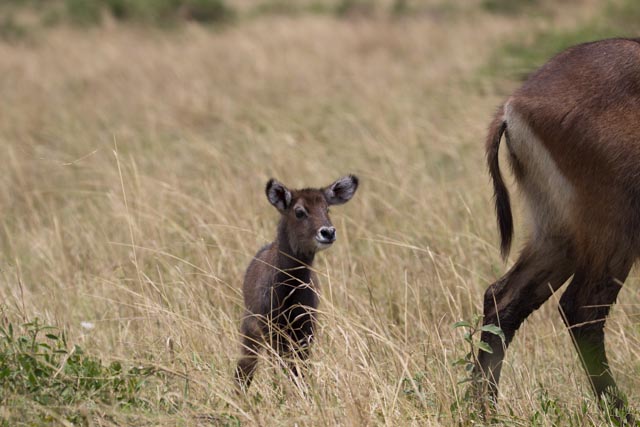
Rare sighting of a young water buck in Serena!
PC Mike Kowalski
PC Lily J-U

Wildebeest calves are born primarily during the long rainy season, and will migrate with
their mothers and the rest of the herd north to the Mara River as the dry season begins.
PC Mike Kowalski

Zebra are born with a light brown overcoat to their black stripes.
In general, the browner a zebra is, the younger it is!
PC Mike Kowalski
And of course, what would a baby pictures post be without some shots of our dear Talek (and Serena!) hyenas? Spotted hyenas aren't limited to a certain time of year when it comes to giving birth, so there are new additions to our clans all the time! Here are some of the most recent.

Adonis, head of our KCM group, had two cubs in early July. Welcome Risk and Clue!
Here is Buenos Aires (head of Main Doc, our largest hyena group) with her cub Hertz

And here are some of the cubs on the Serena side! This photo was taken
 at South clan's den, where currently about a dozen young cubs reside.

BONUS: These photos were taken when we visited the Elephant Orphanage in Nairobi. These guys might not belong to the Mara specifically, but it was still really cool to see how the Kenyan Wildlife Service cares for them before re-releasing them into the wild!


Friday, September 23, 2016

Moments of Wonder


Wake
Obs 5:30 am – 9:00 am
Breakfast
Write up transcriptions and complete chores
Personal time, dinner if you are in Serena
Obs 5:00 pm – 8:30 pm
Dinner if you are in Talek
Bed

You would think that the days would slowly begin to blend together, and at times they do. I have frequently forgotten what day of the week it is, unless I am giving a talk or going to market day. However, while the days may blend together, they are never the same. Not a single day has gone by in the past eight months where something hasn’t made me stop for a few seconds to appreciate where I am. It is not always something big, like watching a group of fully grown hyenas play romping like a group of little cubs, but when I have the chance I try to find a way to share.


Wildlife

The Masai Mara has been referred to as the jewel of the Africa’s game parks for good reason. The large savannas and array of micro-ecosystems supported by two rainy seasons allows for an abundance and diversity of wildlife that is unrivaled in most of the continent. This is one of the many reasons why tourists and research teams, like ourselves, the Mara Lion Project, the Mara Cheetah Project, and the Mara Water project flock to the area. (Though, we have certainly been here the longest at 28 years!!) It is also something that provides research assistants, graduate students, and even professors memories that last a lifetime.


Elands (Taurotragus oryx)
Elands are normally very shy, and will bolt when trucks like ours come near.
This beautiful individual calmly fed within 10 m of my truck without showing any urge to run.
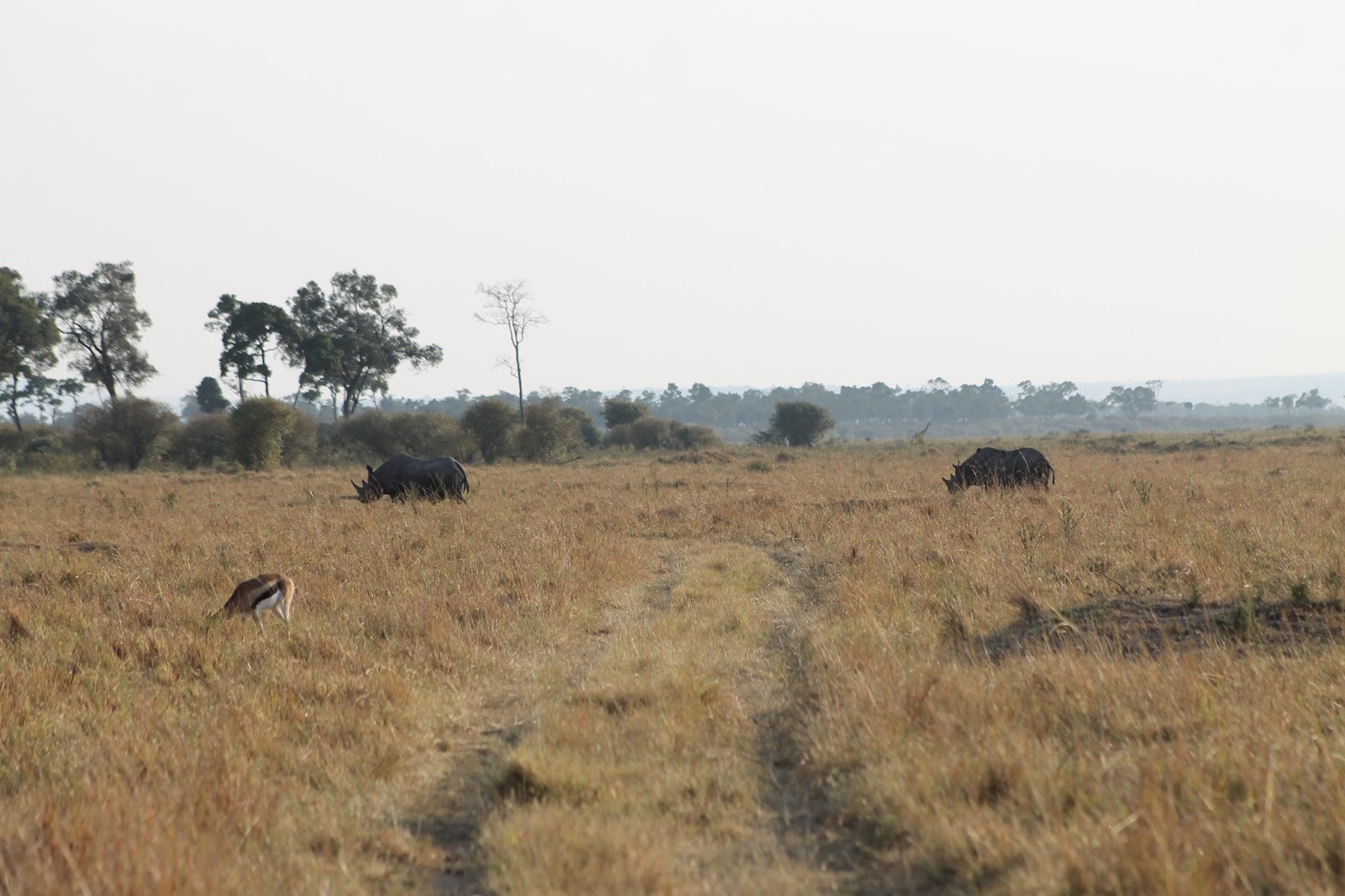
Black Rhinos (Diceros bicornis)
Its rare for us to encounter rhinos, even though we are out daily.
We do our best to let park managers know how often we sight them for population measures
Elephants (Loxodonta africana)
These animals are as majestic as they are intimidating.
I've always preferred to see them along the horizon, rather than outside my tent in the dark.
Wildebeest (Connochaetes taurinus)
At this point in the season its next to impossible to miss these.
The great migration season is starting to trail off, but we still count thousands of them monthly
Spotted hyenas (Crocuta crocuta)
Our lives revolve around these wonderful animals.
They have been called, ugly, mangy and all manner of foul names.
However, the more time you spend with them the more you can recognize their unique beauty

Sunrises and Sunsets

Sunsets and sunrises in the Mara remind me so much of the skies in my home state of New Mexico that my first blog this year was dedicated to the comparison. It is no surprise that the Mara and New Mexico seem so similar, as they share comparable elevations, can both be quite arid at times, are both results of geologically recent volcanic rifts and eruptions, and at one point even shared comparable fauna. Of course, to know this about the American southwest one would have to look at fossil records. We once had American cheetahs, mastodons, and many other species you would expect to see on an East African grassland (but never any bone-cracking hyaenids!). Many of these species went extinct not long ago due to changing climates, and competition with early humans. This connection between the two systems is always brought back to me when I watch the skies, reminding me how fragile this ecosystem is.

This shot was taken while I was having a nice sit with the oldest hyena on record, Navajo.
She will be turning 24 this November, and is still going strong.
I had just finished my morning coffee while observing cub behavior when I turned to this seen.
The wildebeest were apparently unaware that there were 20 hyenas denning here.
The evening was shaping up to be a very slow, dusty and hot game drive.
I had only seen a few jackals out wandering, and I was so focused I almost missed this.
Thankfully, I had stopped to scan the grass for hyenas when I realized what was happening.
This was from one of my last obs in Serena before heading back to the US for a bit.
I was intent on finding an active den to observe moms interaction with their cubs and peers..
Thankfully, when I turned off the main road I was blinded by this scene.

New Life

Due to the nature of my research I am able to spend a great deal of time with young animals as they mature. This means every morning and evening in the field I seek out situations were cubs are playing, nursing, learning and generally being extremely cute. It's what gets me out of bed each morning, even when I've earned a morning in, and what keeps me out late enough that I have to set an alarm so that I leave the den in time to make it to camp for curfew. [The rangers in Serena like us to be back close to 8 pm, because they are tracking poachers, and don't want to accidentally track us]. This means hours of comedic and cute antics of cubs, sub-adults that want to play with the cubs, and mothers either playing or being annoyed by the activity at the den.


This is Buenos Ares (BUAR) with her cub Hertz (HRTZ).
HRTZ was just under a week old when this photo was taken based on ears and facial markings
BUAR still had to lift HRTZ out of the den for her to nurse as she could barely walk
This is either Lake Toba (TOBA) or Kapuas River (KAPU), twins of JAVA
The twins are three weeks old here, but they still don't have distinct markings to tell them apart yet
These cubs are around four months old, and have enough spots to identify them.
When that stand still! The cubs of the South Clan cohort are notoriously playful.
They rarely slow down for more than a minute, and they love piling together to wrestle.
Every once in a while cubs just want to cuddle with their mom and nurse.
Grace O'Malley (OMLY) had an exhausting morning playing before curling up with mom
Not a hyena!
We recently found an area in our territory where some black backed jackals a denning
The pups are getting old enough now that they are learning to hunt, and are fun to observe. 

I hope this photo journey helped you see what we see, and understand why we do what we do. I encourage you to come out to the Mara to see these wonders for yourself. If you want to learn more about conservation of this area please check out the websites below.


Michigan State University | College of Natural Science