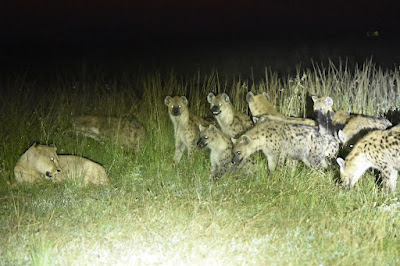
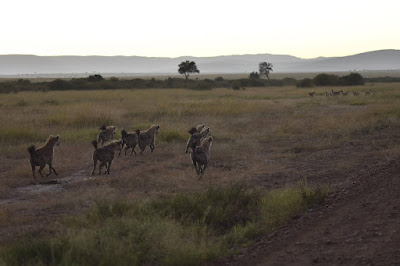
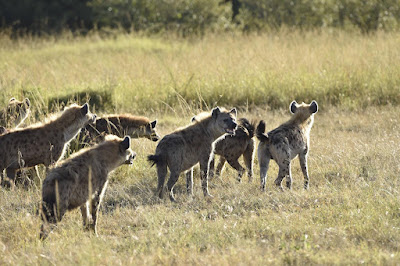
Tuesday, November 10, 2009

Suffice it to say the short rains have arrived.


61 mm in less than two hours yesterday afternoon (that's about 2.5"). 44 of those mm (1.75") came within just half an hour. Unbelievable.

The wildebeest seemed to know the rains were coming (they always do...) as they finally showed up last week. A good four months lather than the migration usually comes, but better late than never. It's good to see them back.

Monday, November 9, 2009

Wanting it Both Ways

One of the biggest inner conflicts I have experienced out here has been with tourists and tour vehicles. On the one hand, tourists help fund the existence of the park, and it's largely because of them that this land has been set aside as a protected area. On a larger scale, tourism is the Kenyan economy's largest source of income. Clearly, Kenya NEEDS tourists, and the Mara is arguably the most popular destination. Furthermore, it's wonderful to see people interested in and excited about wildlife, and wanting to shoot photos instead of bullets. These are all good things.

On the other hand, it can be very frustrating to watch tour vehicles violate the park "rules" (and I use that word loosely because like a tree toppling in a forest, is a rule really a rule if no one ever enforces it?) over and over again. On a daily basis, we see tour vehicles driving off-road, approaching animals to very close distances, making a lot of noise, and occasionally littering. The more in-demand animals like cheetahs and lions routinely get surrounded by tour vehicles. Below is a photo depicting only a portion of the thirty-one vehicles that encircled three adult cheetahs attempting to hunt.


As you can imagine, it's pretty difficult to sneak up on your prey when you've got thirty+ vehicles on your tail, so on this particular evening these cheetahs were unsuccessful. Better luck next time.

Sunday, November 1, 2009

Thirsty Lions

Some of you may already know this, but most of Kenya is in a severe drought. This is affecting crops, livestock, and wildlife within and outside of the parks. Driving back from Nairobi the other day, I couldn’t help but notice how dusty and dry it has become. With many fresh cattle carcasses littering the landscape, I know that many families are going to struggle keeping their livestock going during this next month.

Back at camp, I have a different story to share.

I woke up this morning and looked for a water jug to brush my teeth. Usually, this is just outside of my tent like this:


However, I looked around and could not find it anywhere. Upon closer inspection of the scene of the missing water jug, I saw this:


Yeah, that’s a lion’s footprint. After learning about Leslie’s great detective work in finding her phone, I followed the tracks to find my missing water jug. Finally, I had discovered it, but the lion had already broken in and gotten its fill of delicious H2O. I felt surprisingly accomplished for finding the remains, but a big bummer because this water jug is now out of commission.


Lucky for us in Serena Camp on the western side of the Mara, the short rains are rolling in right now. It’s been raining for the past 3 days; each storm getting progressively larger, longer, and starting earlier in the day.

Maybe now the lions can find their OWN water?

Sunday, September 27, 2009

Camp's newest visitors


Our latest invasion is by a family of banded mongooses (no, the plural is not "mongeese"). Banded mongooses are small social carnivores that inhabit the Mara. To give you a reference point, they look and act a lot like meerkats—lots of vigilant behavior by standing up on their hind legs and swiveling their heads around. Check out the nasty little claws; they're particularly impressive I think.

Interestingly, mongooses are hyenas' closest relative (I think I've talked about this before, perhaps). The four species of hyena—spotted, striped, brown, and the aardwolf—are their own family (Hyaenidae), but if you back up the taxonomic chain a little to the order Carnivora, you'll see that the hyena family and the mongoose family share their most recent common ancestor. So hyenas are more closely related to mongooses than they are to cats, dogs, or bears (I mention bears because here at Fisi Camp we tend to think hyenas have "bear faces"). That being said, mongooses and hyenas split LONG ago, so they still aren't necessarily "closely" related...just closEST.

Anyway, these guys are totally cute, and make really interesting vocalizations. They are constantly squeaking and chirping at each other as they prowl around in search of food. As you'll see in one of these photos, they have recently found a constant food source in some of our more generous camp members (not me—let the record show that I don't feed wildlife in camp!).

It's quite amusing: we'll be sitting enjoying our breakfast, and all of a sudden a dozen mongooses will sprint in from every direction, run around like mad for half an hour, then equally suddenly dash off to their next appointment. The real highlight was watching one take a snail shell and try to crack it by repeatedly whacking it against one of our tent poles. I hope they stick around!


Thursday, September 3, 2009

So far, so good...

Tuesday, August 25, 2009

Potter Park Zoo lecture

To those in the East Lansing area:

A Maasai safari guide will be giving a guest lecture on Kenyan wildlife next month at Potter Park Zoo. You can find out more information here.

Sunday, August 23, 2009

Cub cuteness

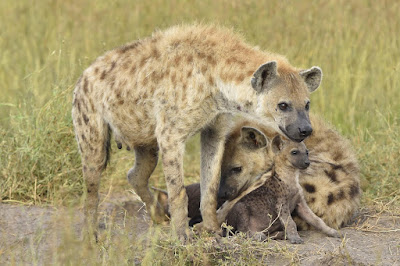
Okay, you've earned it. Here's a completely frivolous post that has nothing to do with the harsh realities of natural selection. Enjoy our latest crop of kiddos.


Monday, August 17, 2009

The shallow end of the gene pool

As we all know, we are not all equally blessed when it comes to genetic perfection, and our hyenas are no exception. Here are two particular gems:

Having had braces for five years, I can relate to poor Snaggletooth, who's looked like this since she was a kid:
Just looking at her cracks me up. But she's smarter than she looks.

Then there's this poor soul...a three-month old cub that is almost certainly blind (I don't think I need to point him out in the photo below).

I fondly call him "Demon Hyena."
When he was two months old, his eyes were a striking blue, but over the last month they have noticeably turned green. It's actually quite sad to watch him because he wanders around, constantly sniffing the air, occasionally stepping on other hyenas, who are less patient than we might be. Unfortunately, vision is absolutely crucial in the life of a hyena. Not only do you need to be able to see to hunt and watch out for ill-intentioned lions, but so many of the social cues that hyenas use are also visual, such as putting ears back to show submission, or giving nasty glares to show dominance. In hyena societies, much like middle school, it's ALL about fitting in and knowing your place in the social hierarchy. If this guy can't recognize when he's being "yelled" at, he might accidentally sit at the Cool Kids' table when he shouldn't, or fail to pay enough respect to the captain of the cheerleading squad. In middle school that might get you stuffed in a locker...for this guy, it will be a lot worse. For now, though, he's lucky enough to still belong at the den, so he doesn't need to depend on anyone but his mama, who surely loves him in spite of his blindness.

That being said, every time we see him we rejoice a little that he's still hanging in. Let's just say I don't think he should buy the big tube of toothpaste.

Friday, August 14, 2009

Nancy Drew's lost file: crimebusting, Maasai-style

There are three things you should know before reading this post:

1. This is easily one of my all-time favorite stories from living in the Mara. Right up there with the cobra slithering across my foot.
2. Because of #1, I am unwilling to compromise on the level of detail, and this story is therefore QUITE long. So if you’re in a rush or have a short attention span, this post is not for you.
3. The idiocy I will display at one point of this story is truly baffling. I do not need you to point this out to me (commenters on the last post, this means you).

Okay, now that those are out of the way, I can begin.

So as you may recall from my last post, I lost my phone while peeing in the middle of the open savannah just over a week ago. Wednesday the 5th, to be exact. Here is the sequence of events that followed:

Thursday: I call a friend in Nairobi and ask her to try to buy me a used phone of the same model, which I need to connect to the internet. It can’t be any old model, unfortunately—it has to be this one. She calls that night and informs me that she has succeeded in procuring this phone for me. HOORAY.

Friday: I have my most trusted taxi driver pick the phone up from her apartment and drive it across the city to the house of another friend, who is driving down to the Mara over the weekend. Meanwhile, I ALSO need to replace my “sim card,” which is a small chip you insert into your phone that contains all your contacts and is basically YOUR line. (So you can insert your sim card into someone else’s phone and use it as “your” phone.) In order to get my old number back, I have to get a new sim card, which can only be obtained at the nearest city, two hours away. (I know this is a little confusing. Stay with me, people.) So I call one of our staff members, James, who happens to be on leave at that city. James goes to the phone company’s shop, gets the replacement sim card, and puts it on a bus leaving for my area that evening. The driver drops it off at a nearby bar, and one of our night watchmen, Steven (remember him, he’ll appear later), picks it up and gives it to me that night. But when I insert it into any phone (and I try several), it won’t work. I call customer service and they tell me technical services will get back to me by Tuesday. This sounds like an eternity to me.

Sunday: The friend who has the phone in Nairobi drives down to the Mara and drops the new phone off at Fisi Camp. I am excited but can’t do much with it until I get my sim card working.

Tuesday: Technical services finally gets back to me, and fixes my problem. I am now able to make and receive calls, and more importantly, connect to the internet. I yelp with joy and do a little Happy Dance all around camp, blissfully touting the wonders of email.

The reason I am telling you all of that is so that you fully appreciate the time, effort and coordination (not to mention cost) that went into getting me this replacement phone. You need to recognize that in order to really comprehend the rest of the story.

Wednesday: It is now exactly one week after I dropped my first phone, and less than twenty-four hours after I got my new one working properly. I no longer keep my phone in my back pocket, but instead in a deep pocket of my vest. We stop in town on the way home from morning observations, and as we’re leaving, an old Maasai mama and a young girl beg a ride from us. When we get to their neighborhood, I stop and get out to open the door for them. You can perhaps see where this is headed.

We get back to camp, not ten minutes after dropping them off, and I conduct my routine inventory of my belongings. Headlamp, check. Digital voice recorder, check. Sunglasses, check. Phone…no phone. NO PHONE. This cannot be happening. I panic and begin calling it from another phone, and the line is ringing, but we can’t hear it ringing at camp. I do some mental calculations…I had the phone when we picked up the mama and girl, that I remember. I only got out of the car once, to let them out. It seems impossible that it could have fallen out of my pocket—I didn’t bend over, and the other things I had in that pocket are all still there. The phone would have had to practically LEAP out of my pocket, defying gravity, to escape me. And yet….

Steven hasn’t left yet for the day, so I beg him to come help me and we hop in the car and return to the spot where I dropped off the mama and girl. No phone. I call it again, and it rings a couple times and then I get the message “line busy,” the way you would if someone hit “ignore” when you were calling. I call again, and this time I get the message “This phone has been turned off.” That means someone must have it.

Let the crime-solving begin.

First we drive to the nearest group of loitering men, and ask them which mama I gave a ride to earlier. They tell Steven they aren’t sure, but a bunch of mamas nearby might know. Two of them hop in the car and we drive to those mamas, and they tell us they don’t know either, but they do know the girl that also got a ride. When we find her, she says he hasn’t seen the phone, but knows where the mama lives, and she hops in the car too. At each leg of this investigation, we seem to acquire more detectives. It’s not clear whether this is just because they are bored or because they might actually be able to help with our investigation. I am too distraught to care.

We finally track down the mama, who comes out of her manyatta along with six or seven other women and countless children. Steven and the other men begin interrogating her. (All these conversations are in Maa, but one of the men speaks English and kindly translates for me.) She says that she never saw the phone, and when they ask if she saw anyone else nearby, she says no. This is where it turns ugly, because the girl pipes up and says that that’s a lie, she saw many other women in the area, and this old mama even talked to one of them. The men begin yelling at the mama to tell the truth, pointing out that I was kind enough to give them a ride home from town, so the least she could do is help me find the phone. She yells back and suddenly many raised voices are all talking at once. In the meantime, another mama comes out of the manyatta and decides this is a good time to shake everyone’s hand, amidst all the yelling.

It is eventually determined that lie or no lie, the old mama really doesn’t know where the phone is. So the girl, the men, Steven, and I pile back into the car and drive to about a half dozen other manyattas, asking everyone we see if they know anything about the phone. No one does, but at this point half of the village knows I’ve lost it. Given how small a community it is and how much people love to chat, by evening the other half will know too. This is part of our plan.

We realize that anyone who has found the phone and intends to use it will have to charge it. Since the manyattas don’t have electricity, there are stores in town that will charge phones for a small fee. So we head into town and stop at as many shops as we can think of, telling them what has happened. We describe the phone to them and tell them that if anyone brings in a phone like that, please call us immediately. I won’t lie—at this point, I’m so angry at myself, embarrassed at my own stupidity and carelessness, that I am crying. In our small Maasai community, the only thing more gawk-able than a young white woman is a crying young white woman, so I am quite the spectacle. But everyone we talk to is incredibly nice and assures us they will try to help. I am convinced that my phone is halfway to Nairobi right now to be sold, and now I’m out a bunch of money and have to go through that hassle of getting a new phone all over again. I decide this is definitively the worst day I’ve had in the Mara.

But wait.

The next afternoon (yesterday), Steven gets a call from one of the shopkeepers, who says that a man just brought in a phone just like mine, wanting to charge it. The shopkeeper didn’t have the right charger, but he cleverly told the man he would get it and to come back later. Then he called us and told us to bring him the charger, and we’ll catch him. A sting. I love it.

So we drive into town, with the charger and the receipt for the phone (complete with the serial #), me trying not to get my hopes up, Steven grinning widely, Ben (another research assistant) driving and translating for me. The shopkeeper has told us to park around the corner so the thief doesn’t see our car, which says “hyena research” on it. I ask how he knows the phone belongs to a Fisi Camper, and Ben says that everyone knows, that the whole town has been talking about it and looking for it since yesterday. (If that doesn’t sell you on small-town kindness, you’re hopeless.) So we send Steven in to drop off the charger, and anxiously wait around the corner for the man to come back with the phone.

As we wait, we get a call from a different shopkeeper, who says the man was also at her shop, again trying to charge the phone. The man works at a nearby lodge and she even knows his name. Taking a different approach than the first shopkeeper, she tells him, “This phone is stolen, it belongs to a Fisi Camper. Return it to the security office of your lodge at once.” Whether or not he plans to do this, at this point he at least knows we are onto him.

We go to see the shopkeeper, who says the man has left and is walking back to the lodge. So we begin driving that way and see him walking with four other men (it really helps that Steven knows everyone in town). We quickly work out a plan—first approach is just to ask for the phone, no harassment, second choice is to threaten calling the police—and stop, casually offering them a ride. They gladly get in, seemingly oblivious to our cause. We drive to the lodge, making small talk, and when we park and get out, the man’s friend turns to us and says, “We know why you are here. Rather than involve other people, let’s just settle it right now, here.”

And with that, one man pulls out my phone and I pull out the receipt with the serial number. The men compare and agree that it is indeed my phone, and the man readily gives it back to me. I do the Happy Dance once again (reunited and it feeeeels so gooood!) and tip everyone involved, especially the man who had my phone. It turns out that he is NOT the thief—he bought the phone from a friend the day before, so THAT guy is the thief. And wouldn’t you know it, he’s also walking to the lodge right now (seriously, I said it was a small town). In fact, we passed him earlier on the road. So we all get back in the car and track him down. The men get out and begin talking very quickly with the thief, but we decide to stay out of it and thank everyone and go on our merry way.

Case closed! Mystery solved! Private Investigator Steven proves he really is the “head of Fisi Camp security,” as he often reminds us.

If you happen to be taking issue with my use of the word “thief” (ahem, Daniel), considering it’s not exactly like he swiped the phone out of my bag—he found it on the ground, after all—please consider the following things this man could have done:
1. He could have turned it into the police.
2. He could have answered it when I called it several times.
3. He could have called the most recently dialed numbers to try to track me down.

Now consider what he DID do:
1. He hit ignore when I called the first couple times, then turned the phone completely off.
2. He took out my sim card and threw it away.
3. He sold my phone to his friend, even though he most likely heard from people that I was missing it.

I have learned two very important lessons from this escapade:

1. From now on, I will be zippering the pocket in which I keep my phone.

2. The kindness and selflessness of a community that genuinely desires to help someone can overcome one bad apple. That being said, you can count on that bad apple being the one to find your phone if you drop it. Which you should really try hard not to do.

Tuesday, August 11, 2009

Mara Hazard #712: Loss of phone whilst peeing

One lovely part of working out here is that we never have to “hold it”—since there are no official bathrooms, everywhere is our bathroom. When we have to pee, we just stop the car, hop out, look around for peeping-tom tourists and hungry-looking lions (fat lions are okay), and pop a squat. It’s quick, it’s simple, and it’s very liberating.

But apparently it’s also perilous. You all probably know someone who has dropped a cell phone into a toilet. (Right now my mom is thinking, “No, no I DON’T know anyone who has done that…what kind of friends does my daughter have?!?”) Well, as is true for many aspects of a modern American life, we have an unconventional equivalent here in the Mara. Last week I had to make a pit stop during a long morning observation session. I stopped the car, hopped out, dropped trou, took care of business, and off we went on our merry way. Unbeknownst to me, my cell phone had fallen out of my back pocket. The very phone that is my lifeline out here, my connection to my loved ones, my boss, the world at large via the internet…all gone with one emptying of the bladder.

I didn’t realize this until about an hour later, at which point we were in a different area. We went back and drove around, furiously calling it while driving with our heads out the windows, searching with our eyes and ears, but alas, to no avail. Somewhere out there, a hyena is happily reconnecting with his friends and family from the Serengeti at the rate of three shillings per minute.

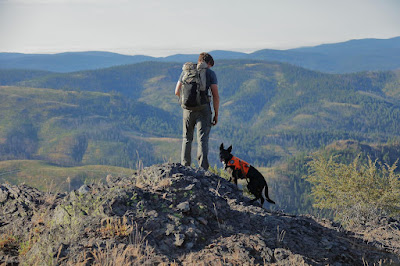
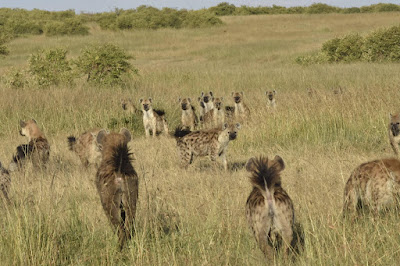
If you’re thinking that it couldn’t possibly have been THAT difficult to find the phone, take a look at the photos below. Where would you even begin?

Michigan State University | College of Natural Science